Benefits of Cognitive Games for Preschoolers
Engaging preschoolers in fun cognitive skill-building games offers a multitude of benefits that extend beyond simple entertainment. These activities are specifically designed to stimulate young minds, fostering crucial developmental milestones. Through play, children learn to problem-solve, think critically, and enhance their memory and concentration, laying a strong foundation for future academic success.
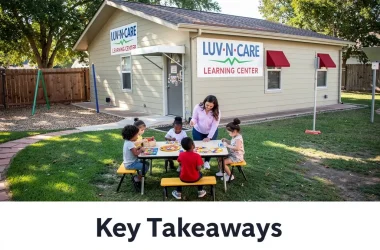
For instance, puzzles help develop spatial reasoning and fine motor skills, while memory matching games boost short-term recall. Storytelling and imaginative play encourage creativity and language development. At Luv-N-Care Learning Center, we integrate these playful learning experiences into our daily curriculum to ensure holistic child development.
Types of Cognitive Games for Early Learners
A variety of game types can effectively target and enhance cognitive skills in preschoolers. These games are tailored to be engaging and age-appropriate, ensuring that children are challenged without becoming overwhelmed. The key is to introduce diverse activities that stimulate different areas of cognitive function, promoting well-rounded development.
Examples include sorting and matching games that improve pattern recognition and classification abilities, simple logic puzzles that encourage sequential thinking, and building blocks that enhance spatial awareness and problem-solving. These activities are a cornerstone of the educational approach at Luv-N-Care Learning Center.